
Landsbyggefonden's national housing data warehouse consolidates data from across the Danish social housing sector. The platform runs on TARGIT, a BI tool with no CSS access. I led product design within those hard constraints, making dense, multi-source dashboards legible and navigable.
Landsbyggefonden administers support and financing for the Danish social housing sector. Det Almene Datavarehus is their central data warehouse, consolidating financial data, residential data, energy consumption, building records, rental data, and more from across their existing self-service systems.
The platform is built on TARGIT, a business intelligence tool with no CSS customisation and only the configuration options the platform itself exposes. Designing for it meant working entirely within those constraints, without the ability to override layouts, typography, or spacing through code.
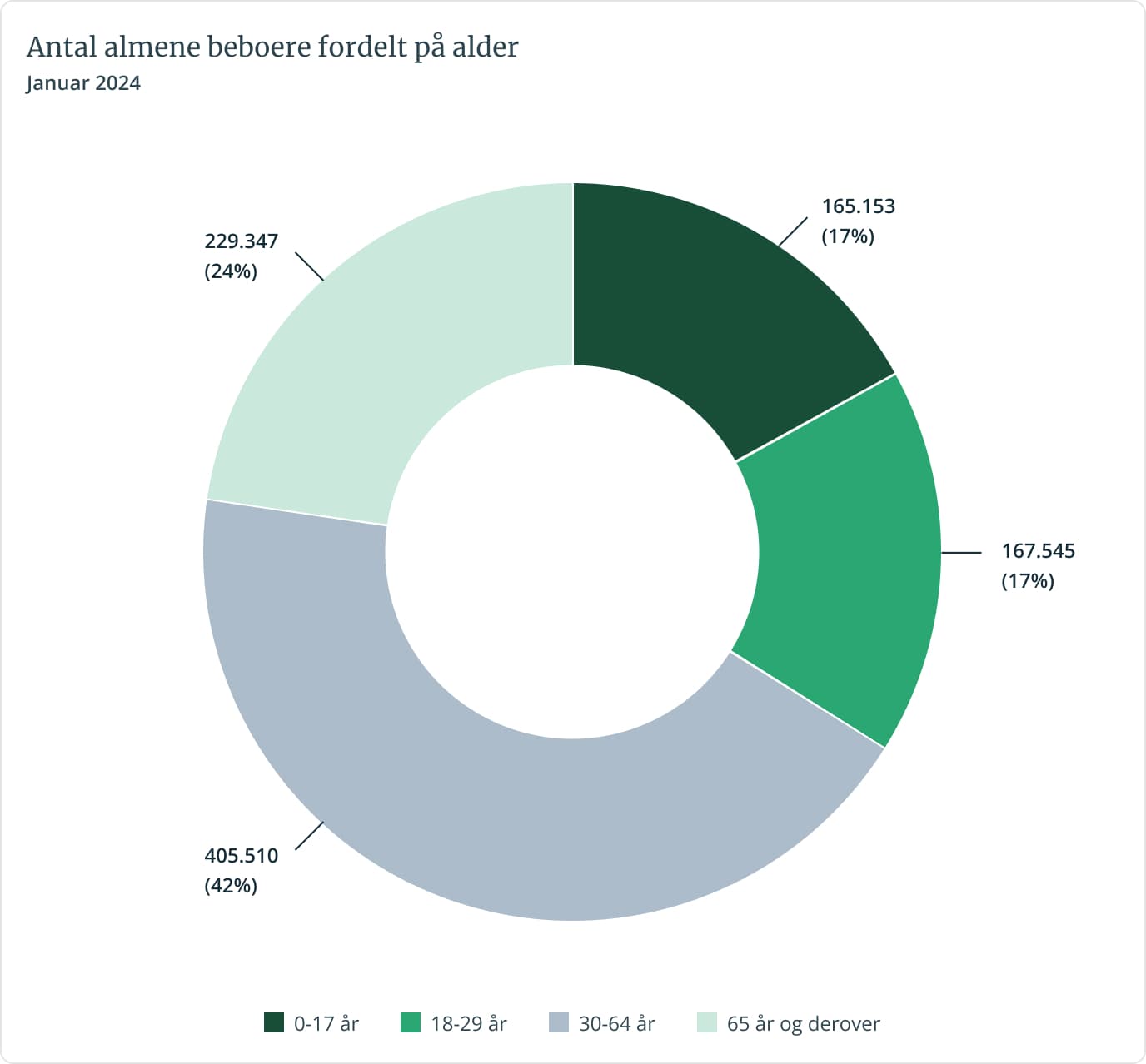
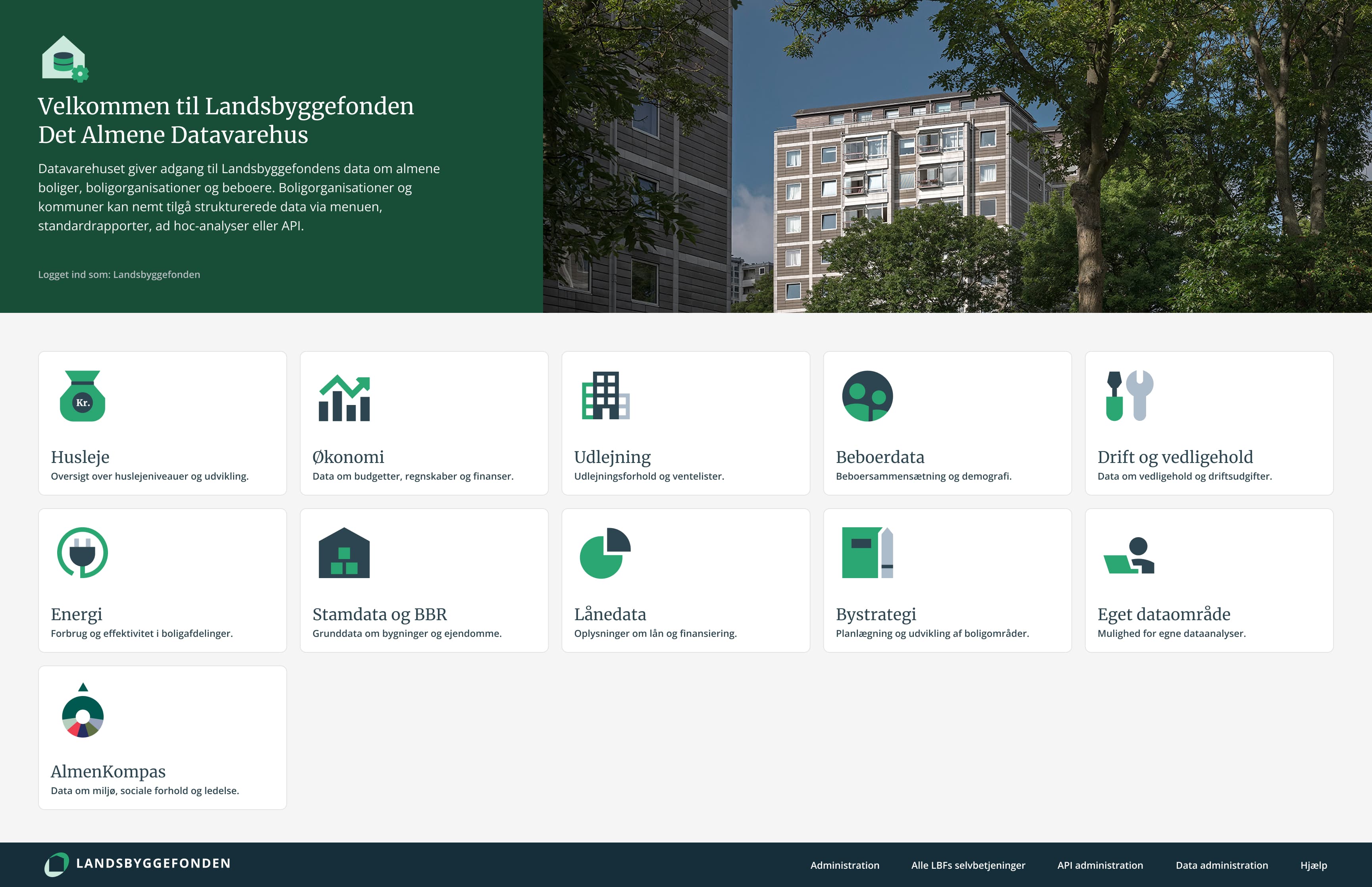
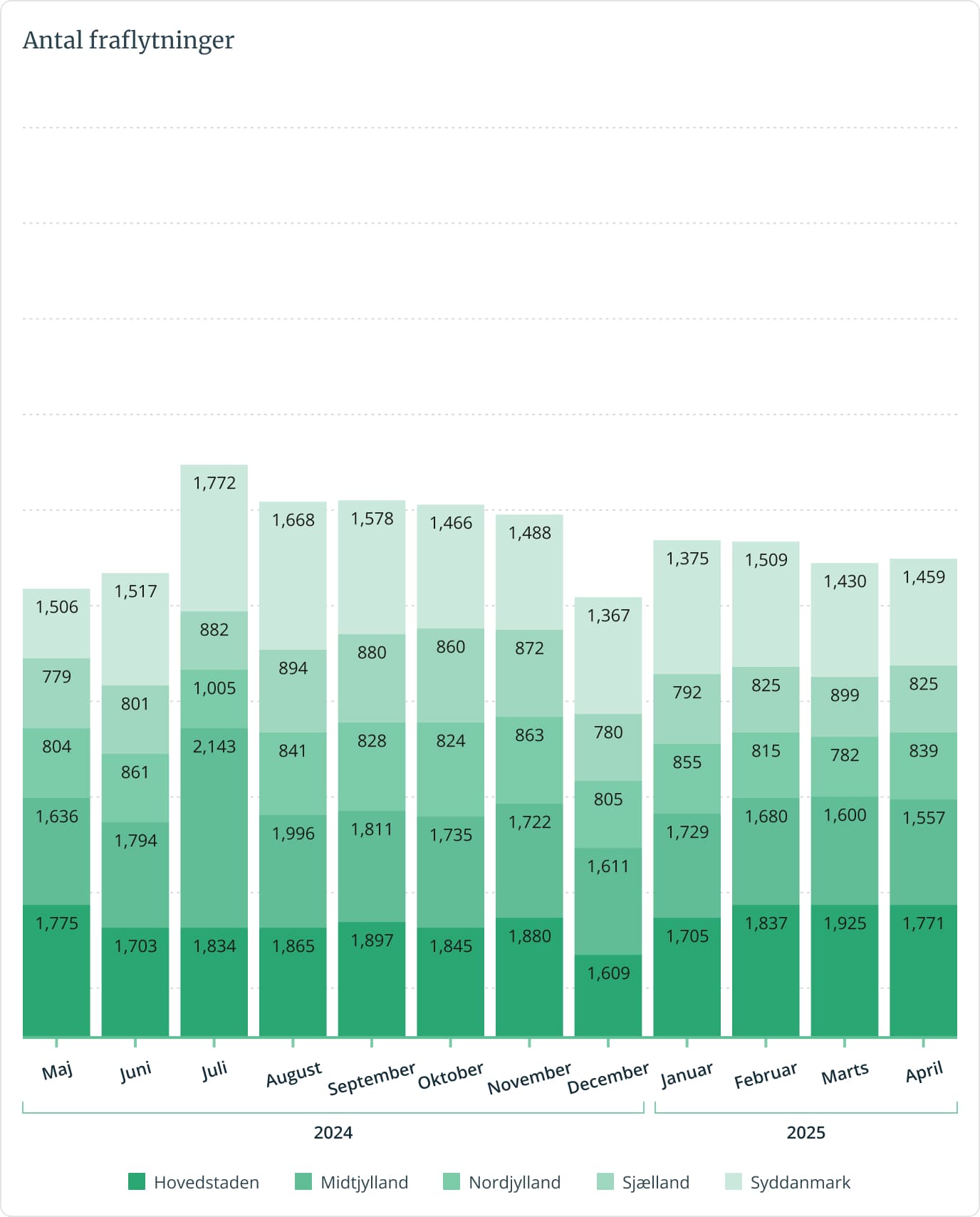
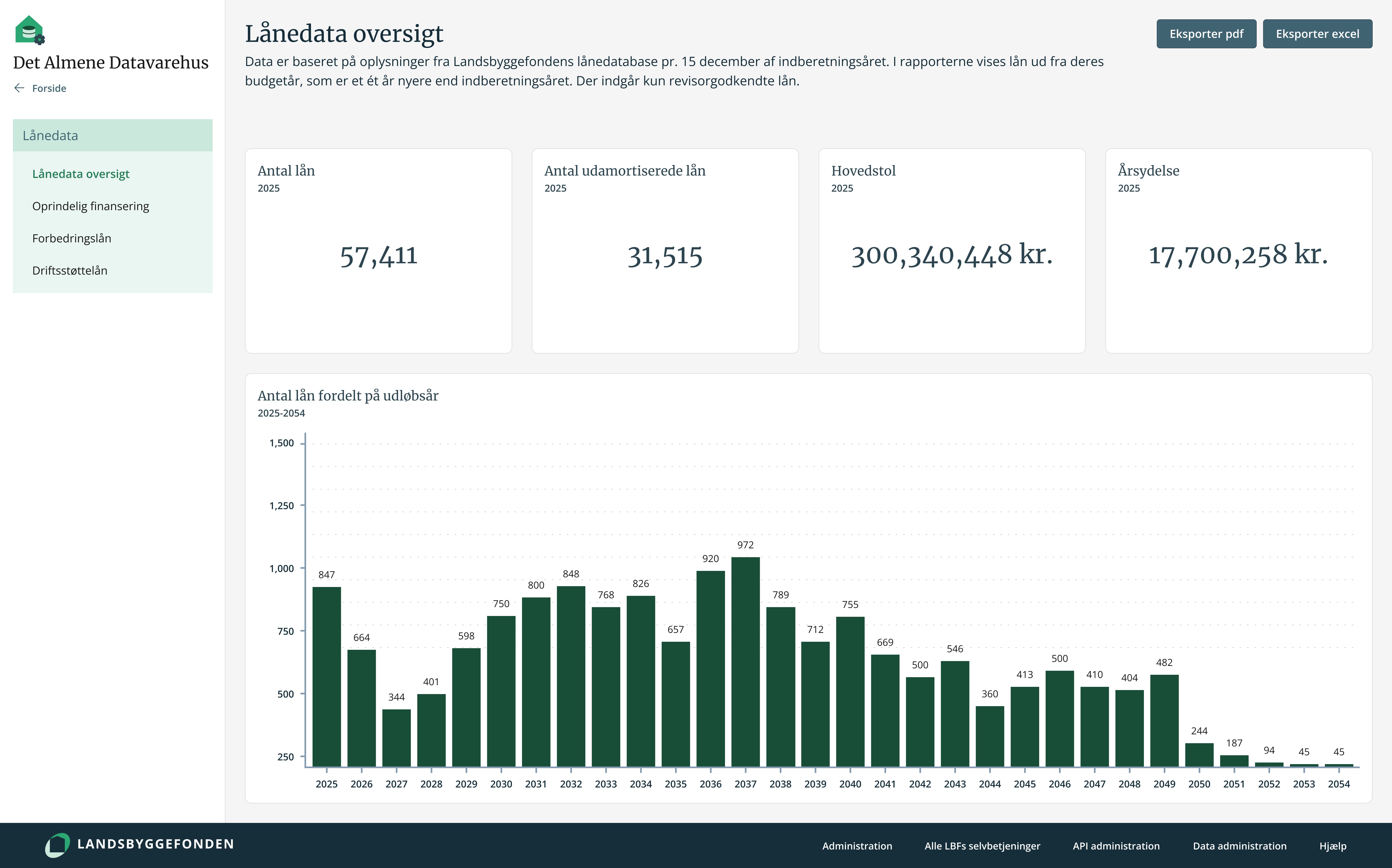
I led product design for the platform, responsible for visual design, information architecture, dashboard layouts, and report structures.
The work required balancing several moving parts at once: a new LBF website identity that was still being defined during the project, an existing self-service product that had launched the year before but served a sufficiently different use case that I couldn't simply reuse its design system.
Rather than defaulting to either reference, I had to create a solution that felt clearly connected to LBF's visual identity, served the specific needs of data warehouse users, and was achievable within TARGIT's configuration-only constraints: no CSS, no code overrides, just platform settings.


CONTACT


